I am supposed to fix my resolutions for 2026. I was oblivious to what New Year’s resolutions really meant for a good chunk of my life, just as I was for many other bandied-about terms like mortgage or interest rate (although resolutions are not remotely as boring a topic). It was not until in my late adolescent years – when I began losing interest in doing things, when my motivation (whatever iota of it existed) gradually began to wane – that I sort of jumped onto the bandwagon (had to!). Perhaps it was when I started finding the point of setting resolutions itself redundant — that I finally realized it was then, more than ever, that I needed to set a resolution. By then, I mean now. And by resolution, I mean…
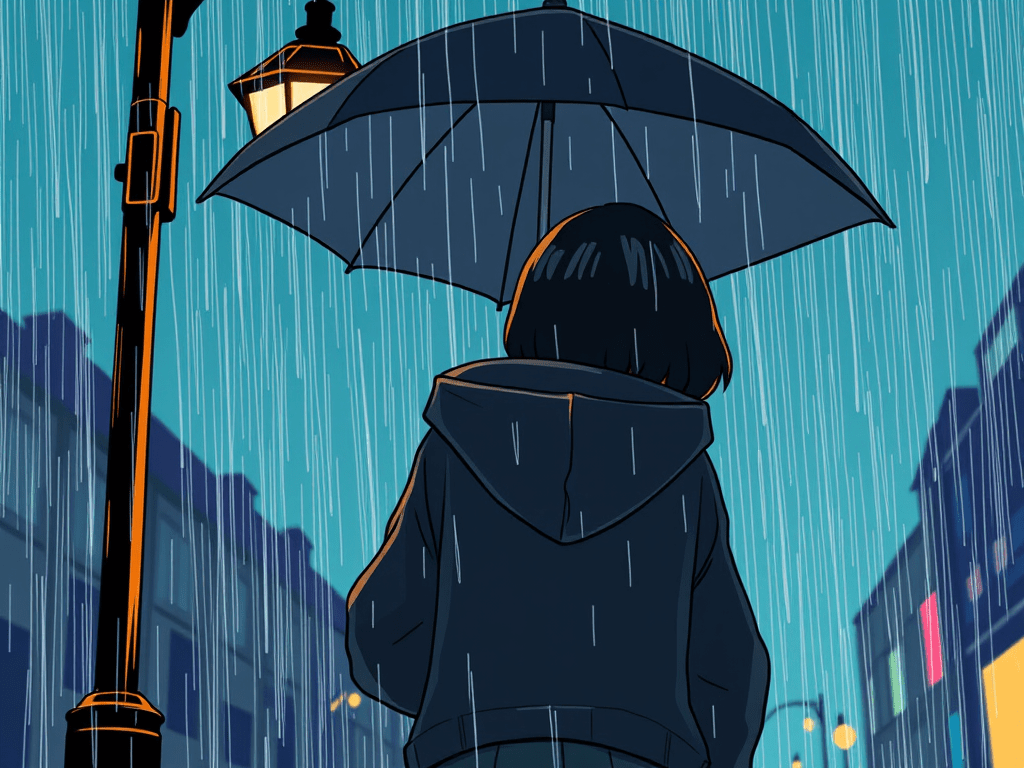
I mean, I don’t know what I mean. What I mean is that when I was in my early twenties, just the very sight of an overcast sky would stir within me this sense of giddiness. This one time, I had a crush on a guy, and I remember how the cloud-laden sky on a random day had only helped intensify the already-heightened feelings brewing inside my young pre-adolescent heart. Most of my friends hated gloomy, rainy days, but I recall myself associating them with a sense of victory – that rain meant storm, and storm meant someone – out there – braving it only to come find me. Too dramatic and sort of gross, isn’t it? But what is a better time than your pre/adolescent years to nurture an excessive sense of romanticism, so that when life knocks you in the teeth later, you can press those feelings out drop by drop – the way a thrifty painter squeezes an old paint tube from the bottom up – rationing it to last through all the years ahead? Although my tube seems to have dried up already, because tell me why rainy and gloomy days don’t seem to inspire me anymore? I try everything; I do everything right, but as I stand before my balcony and stare at the pouring rain, now mixed with a smog of sorts, the vast stretch of concrete jungle that had effortlessly filled me with a feeling of wonder in the initial years now leaves me with absolutely… nothing. Is this what the onset of a breakup feels like? Is this what they say falling out of love is? No no no no … no no please wait…
Please wait because only yesterday, it feels like, my parents were yelling at the top of their lungs at me for being on my phone. Fast forward a few decades, and now it is they who are always on their phones. Not that I mind it at all, but what I mind is wondering when they stopped yelling at me. They still speak at a volume unmatched as always, but that isn’t the same as yelling at me. And I realize, uncomfortably, that I need them to yell at me. I don’t know when they stopped, or why. All I notice now are the veins on their hands, more prominent beneath thinning, wrinkled skin, and the lines on their faces that you could count like tally marks of the struggles they’ve overcome. Clearly, my parents are aging, and clearly, I seem to not be ready to accept it. I would take their yelling over their fading any day. I would take their anger over their quiet withdrawal, over the way they sometimes retreat into themselves when I am now the one raising my voice. I mean, can’t it wait? Can’t they wait? I mean, didn’t they spend years asking us to wait – every morning as we rushed out to catch the school bus, them running behind us, calling our names, pressing something forgotten into our hands at the last second? When did it turn the other way, when did I become the one running after them, asking them to slow down and to wait a little longer, just so I have a little more time to figure life out? Just so that I have a little more time before I become even lonelier, before I come back home to find it empty?
Thoughts like these occasionally keep me busy, pulling me back to a time when life was just simpler. And like the thrifty painter I mentioned earlier, I squeeze memories of it out drop by drop when life turns gray. But fingers tire at one point, and the tube hardens in your grip – not because the paint ran dry, but because what’s pushing through isn’t paint anymore. It’s life itself, coming at you with its woeful claws. But unlike our ancestors, I am almost always unprepared in the face of any potential threat. The threats look different now than they did in the primitive years. An unanswered email. A toxic boss. The chance of being fired. They seem small, almost embarrassing, when you compare them to the dangers our ancestors faced, but predators don’t always have to bare teeth, do they? Sometimes they are just lifeless, bureaucratic, rigged institutions. But in the ways that matter most, they are no different from wild predators: they drain your energy, keep you on your toes, and make survival a constant battle of the “fittest”. Thousands of years ago, besides fighting off predators, our survival was about fighting off hunger; thousands of years later, it is still the same. This is why I guess the rain can’t save me anymore. Because although romanticism (through stories and memories and hope) is possibly what gives the most color to life, when hunger knocks on the door, romanticism’s the first thing that slips quietly out the back. Old TV shows don’t seem comforting anymore, car rides to your favorite spots don’t excite you anymore, and bad jokes seem to land flat.
But then some day, the sun comes up again. There’s food on your plate (metaphorically), and life finally gives you a break. And for a brief moment, you wonder — was life always this good? Did the air, despite its toxins, always feel so breezy? Were your friends always this funny? Did waking up always feel this light? It’s during moments like these that you realize what romanticism actually is. To me, it’s never been wishful thinking, not pretending things are easier than they are — just seeing life without the dullness that builds up over time. That’s why “seeing life through rose-tinted glasses” shouldn’t get such a bad name. They don’t distort reality. We do. The tint doesn’t add color; it lifts the haze, letting things look the way they do when you’re no longer bracing yourself for impact.
Have you watched The Great Gatsby? In it, Daisy – reunited with Gatsby after years apart, surrounded by the lavish life he built just to reach her – talks about her daughter and says she hopes she’ll be “a beautiful little fool.” There are many ways to read that line. One way I read it is this: being a fool isn’t about lacking intelligence; it’s about privilege. Getting to remain a fool in life means getting to keep your heart tucked away from grief and sorrow. It means getting to enjoy life the way it’s meant to be enjoyed — getting to choose romanticism without carrying the constant weight of knowing better.
So I think my resolution for 2026 is simple: to let that lost sense of romanticism come back. Maybe even to let myself be a little foolish again. It sounds dramatic, I know, but over time I’ve realized this much is true: the only thing that really matters in life is how much you’re able to meaningfully enjoy it. And joy depends a lot on whether you allow yourself to see life in color. The way prison inmates learn to make makeup out of cocoa and flour; the way a child finds wonder in a puddle; or how simply hanging fairy lights in an otherwise half-damaged room can bring back a sense of awe.
 Between The Squiggles
Leave a comment